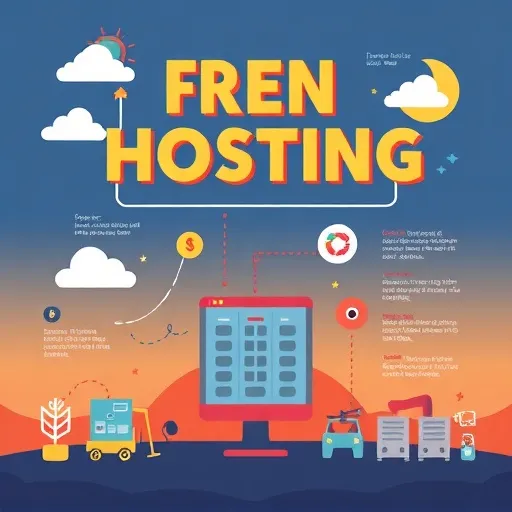
Free web hosting exp
What Does "Free Web Hosting" Actually Mean in 2026?
At its core, free web hosting is pretty much what it sounds like: a hosting provider stores your website files on a server and serves them to visitors without charging you a monthly fee. But let's be real — nothing in tech is truly free, so the real question is: what's the business model behind free web hosting in 2026? Understanding that model tells you almost everything about the user experience you're signing up for before you commit a single file.
Broadly speaking, free web hosting services in 2026 fall into a few clear categories, and each one shapes your website performance and branding differently:
- Ad-supported hosting. The hosting provider places advertisements on your web pages, or requires you to display a banner, in exchange for covering server costs. Your content pays the bills instead of your wallet.
- Freemium hosting. A well-known platform offers a stripped-down free tier to get you in the door, hoping you'll upgrade to a paid plan as your website needs grow. This is by far the most common business model for free web hosting today.
- Community or non-profit hosting. Some services are subsidized by donations or run by enthusiast communities, especially for niche use cases and hobby sites.
- Trial-based "free" hosting. Technically free web hosting for a limited window — 30, 60, or 90 days — after which you must pay or lose your website. It's a free trial wearing a free hosting disguise.
Knowing which category a provider belongs to tells you almost everything about the experience — the ads, the limits, and the upgrade path — you're signing up for with any free web hosting plan.
The Genuine Perks of Free Web Hosting for Beginners and Hobbyists
Let's give credit where it's due. Free web hosting has legitimate advantages that paid hosting can't match — at least not at the entry point. For students, hobbyists, and first-time site owners, these perks are genuinely valuable.
First, there's zero financial risk. For someone testing a website idea, learning web development, or building a personal project, free web hosting removes the biggest barrier: money. You can spin up a site today, experiment, break things, rebuild, and walk away without a single charge. Second, onboarding is fast — most free hosting platforms in 2026 let you sign up, pick a subdomain, upload files or connect a site builder, and go live in minutes. Third, these accounts make great learning environments — a low-stakes sandbox for HTML and CSS, content management systems, and DNS basics. And finally, many freemium platforms offer a seamless upgrade path: you start with free web hosting, outgrow the limits, and move to a paid tier on the same platform.
The Real Trade-Offs Behind Free Web Hosting: Storage, Bandwidth, and Support
Now for the part the marketing pages tend to gloss over. Free web hosting in 2026 comes with real constraints, and ignoring them is how people end up frustrated. Storage limits typically cap out in the hundreds of megabytes to a few gigabytes, and monthly bandwidth is often capped too — fine for a portfolio or small blog, but a problem the moment you add high-resolution images, video, or hit a traffic spike.
Many free hosts only give you a subdomain instead of support for a custom domain, which hurts branding and brand image. Performance and uptime are variable since free tiers share server resources with many other users — slower load times and less predictable reliability follow. Customer support for free users is typically limited to community forums and knowledge bases. And yes, ad-supported hosts may inject banners or a "hosted by" badge, which is a small thing until you're presenting a professional image. Before committing to any free web hosting, always check data ownership and portability — a reputable provider offers straightforward backup and export options.
When Free Web Hosting Is a Smart Fit and When to Walk Away
None of the above means free web hosting is bad — it means it's situational. It genuinely shines for personal blogs and portfolios with modest traffic, learning projects, prototypes and MVPs you want to validate, event pages that only need to exist briefly, and small community sites. If your project fits one of these profiles, free web hosting can carry you a long way.
On the flip side, skip free hosting if you're running an online store, handling customer payments, needing reliable uptime for business-critical operations, expecting significant traffic, needing email hosting tied to your domain, or requiring advanced security features and dedicated resources. In those cases, the savings from free web hosting are illusory — you'll pay in lost credibility, downtime, or migration headaches.
How to Evaluate Free Web Hosting Providers and Their SEO Impact
If you've decided free web hosting fits your needs, read the fine print on limits: bandwidth caps, file count restrictions, database size, and allowed scripts. Confirm domain flexibility — can you connect a custom domain later and upgrade without rebuilding? Test performance at different hours, review export and backup options, read the terms of service for inactivity clauses, and study the upgrade path so you can plan ahead.
Search visibility matters even for small sites, and your choice of free web hosting can influence it. Slow shared servers hurt user experience signals and crawl efficiency; frequent outages frustrate visitors and interfere with crawling; a custom domain builds stronger brand equity and long-term authority than a provider subdomain; and injected third-party ads clutter pages and distract from your content. Also, don't fall for the myths: free hosting isn't inherently insecure (reputable providers offer SSL certificates and isolated environments), you can usually migrate away, and plenty of experienced developers use free tiers for side projects. Just remember: free always comes with strings — ads, limits, or upgrade prompts. Know which ones you can live with, keep your content portable, and free web hosting in 2026 can be a smart, low-risk starting line rather than a permanent home.